BACKGROUND
Rapid progress in the genome editing field is contributing to solving complex biological questions and to developing advanced gene and cell therapies for treating genetic disorders with unmet medical needs and high societal impact. Despite these advances, major challenges remain, particularly with respect to the delivery and precision of the attendant gene-editing tools and procedures, respectively.
The Genome editing group at the Department of Cell and Chemical Biology (LUMC) focuses its research on addressing these two critical challenges by investigating: (i) viral vectors as delivery platforms for gene-editing tools; and (ii) seamless gene-editing strategies that, in contrast to conventional approaches, do not create mutagenic double-strand breaks in chromosomal DNA. The insights and genome editing systems resulting from this research are being increasingly directed to the modeling and correction of disease-causing mutations in in vitro and in vivo models.
These interconnected research lines aim to contribute to the development of novel therapies for monogenic disorders affecting the striated musculature and hematopoietic systems. To achieve this goal, the group actively collaborates with researchers at LUMC, other Dutch academic institutions, and European research networks. Crucially, important aspects of our work build upon the pioneering contributions of Leiden University and LUMC in the fields of adenoviral vector research, hematopoietic stem cell transplantation, and Duchenne muscular dystrophy.
RESEARCH
Our research investigates precision genome engineering principles based on the delivery of programmable DNA-targeting reagents into human cells. The genome-editing systems under study leverage viral vectors, RNA-programmable nickases (e.g., prime editors), and exogenous donor DNA templates for targeted gene correction.
We seek to systematically analyze genome editing outcomes, both intended and unintended, resulting from the use of nucleases versus nickases and from donor DNA substrates with different structures and topologies. These studies aim to enable seamless and scarless chromosomal edition and are supported by the development and integration of gene delivery and genome editing technologies. Together, these approaches provide a framework for advancing precise and safe genome editing strategies with translational potential.
Additional information about our team and research activities:
- Group alumni recipients of the Greiner Award from the Netherlands Society of Gene and Cell Therapy (NVGCT) for the best Dutch thesis on gene or cell therapy research are: Ignazio Maggio (2016), Francesca Tasca (2023), and Qian Wang (2024). Links to their Ph.D. theses are indicated below...
- Greiner Award – Netherlands Society of Gene and Cell Therapy
- Ignazio Maggio winner of the LUMC Best Thesis Prize 2017 (Non-clinical).
- Francesca Tasca (Marie Skłodowska-Curie Ph.D. fellow) winner of the Annual Prize for Neuromuscular Diseases 2022 - Best scientific article Francesca Tasca wint Jaarprijs 2022 - Spierfonds
- As part of the 50th anniversary celebration of the inception of Nucleic Acids Research, the editors have highlighted some of the most impactful studies published in the journal since 2016 on the CRISPR field. Two studies from our group feature in this collection entitled: "CRISPR in Nucleic Acids Research: a sequel collection". https://academic.oup.com/nar/pages/crispr-collection-2024 These studies are:
Probing the impact of chromatin conformation on genome editing tools. Chen et al. Nucleic Acids Res. 2016 44:6482-92. PMID: 27280977
Selection-free gene repair after adenoviral vector transduction of designer nucleases: rescue of dystrophin synthesis in DMD muscle cell populations. Maggio et al. Nucleic Acids Res. 2016 44:1449-70. PMID: 26762977
- Een virus als medicijn - Spierfonds - Een bijzonder staaltje omdenken
- Op zoek naar een veiligere en nauwkeurigere gentherapie voor Duchenne - Spierfonds
RECENT research projects:
- Active: Horizon Europe Doctoral Network GETRADI - "Gene Therapy of Rare Diseases" Getradi – University of Copenhagen (ku.dk)
- Concluded: Horizon 2020 Doctoral Network IMGENE – “Improving Genome Editing Efficiency” https://imgene.ku.dk/about-imgene/
- Collaborative Dutch Research Council (NWO) - Open Technology Programme research project HARVEY – Prof. P. Doevendans (UMCU), Dr. G. Boink (AUMC) and Dr. Gonçalves (LUMC)
- Collaborative Prinses Beatrix Spierfonds research project on DMD gene repair –Dr. M. Gonçalves and Prof. Annemieke Aartsma-Rus “Duchenne-patiënten verdienen een therapie” - Spierfonds
- Active: Duchenne Parent Project NL research project "Investigation of DNA cutting-free systems for defective DMD gene complementation enabled through high-capacity adenovector delivery"
- Active: PLN Heart foundation research project "Investigation of next-generation gene editing systems for DNA break-free correction of pathogenic PLN.dR14 alleles"
Other
Concise review ‘Soft’ genome editing using CRISPR nickases as a potential source of safer cell products Fulfilling the potential of gene editing: at the tipping point (insights.bio)
Muscling out gene mutations | Science Translational Medicine
- Adenoviral Delivery of CRISPR/Cas9 Aims to Expand Genome Editing to Primary Cells (addgene.org)
- Why Viruses may be a Genome Editor's Secret Weapon | Discover Magazine
- Interview in BioInsights - Trends and advances in gene therapy delivery and gene editing - spotlight
- ADDGENE resources: https://www.addgene.org/Manuel_Goncalves/
Events:
Ph.D. theses from lab alumni:
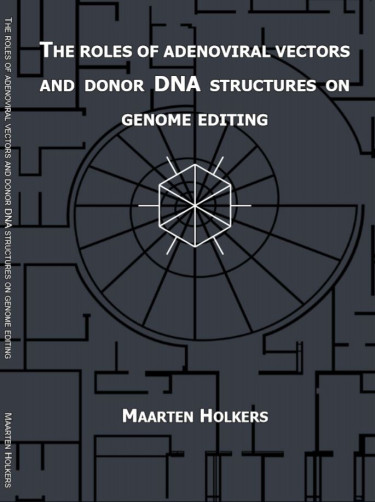
- Maarten Holkers "The roles of adenoviral vectors and donor DNA structures on genome editing" (2016) https://openaccess.leidenuniv.nl/handle/1887/37412.
- Associate Director at ProQR Therapeutics, Leiden, the Netherlands.
- Current position, Biosafety officer for research at J&J, Leiden.
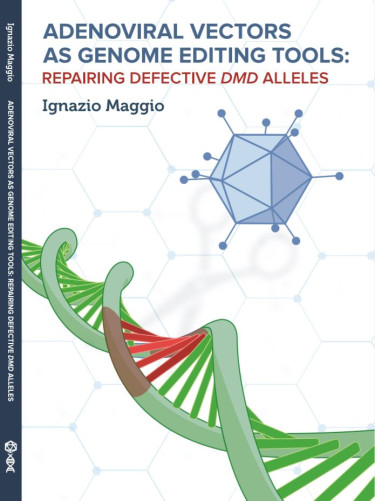
- Ignazio Maggio (cum laude) "Adenoviral vectors as genome editing tools: repairing defective DMD alleles" (2016) https://openaccess.leidenuniv.nl/handle/1887/44288.
- LUMC Best Thesis Prize 2017 (Non-clinical).
- Greiner Award 2016 from the Netherlands Society of Gene and Cell Therapy (NVGCT) for the best thesis in the fields of gene or cell therapy carried out at a Dutch University or Institute.
- Current position, Lecturer, Free University Amsterdam, Center for Neurogenomics and Cognitive Research.
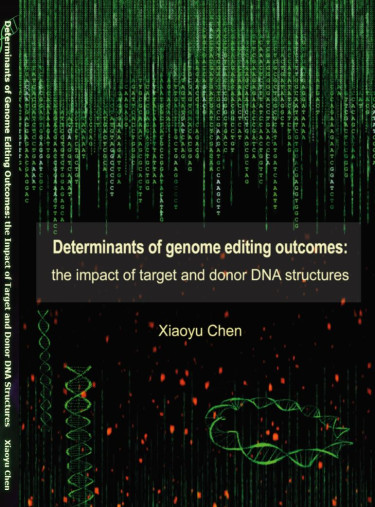
- Xiaoyu Chen "Determinants of genome editing outcomes: the impact of target and donor DNA structures" (2018) https://openaccess.leidenuniv.nl/handle/1887/62204.
- Postdoctoral fellow, Stanford University, Dep. of Psychiatry and Behavioral Sciences, USA.
- Current position, Faculty member at St. Jude Children's Research Hospital, Center for Pediatric Neurological Disease Research (CPNDR), Memphis, USA.
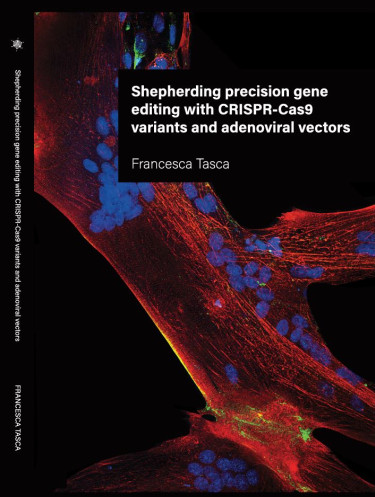
- Francesca Tasca "Shepherding precision gene editing with CRISPR-Cas9 variants and adenoviral vectors" (2023) Shepherding precision gene editing with CRISPR-Cas9 variants and adenoviral vectors | Scholarly Publications (universiteitleiden.nl).
- Greiner Bio-One Award 2023 from the Netherlands Society of Gene and Cell Therapy (NVGCT) for the best Dutch thesis on gene or cell therapy research Greiner Bio-One Award (gbo.com)
- Scientist at VectorY Therapeutics, Amsterdam.
- Current position, Amsterdam University Medical Center - CRISPR Center.
- Qian Wang "Soft genome editing based on CRISPR nickases: it takes one break to tango" (2024) Soft genome editing based on CRISPR nickases | Scholarly Publications (universiteitleiden.nl)
- Greiner Bio-One Award 2024 from the Netherlands Society of Gene and Cell Therapy (NVGCT) for the best Dutch thesis on gene or cell therapy research.
- Postdoctoral fellow at the Gonçalves lab (LUMC); Postdoctoral fellow at the 'ten Dijke's lab (LUMC).
- Current position, Netherlands Cancer Institute (NKI), Amsterdam.

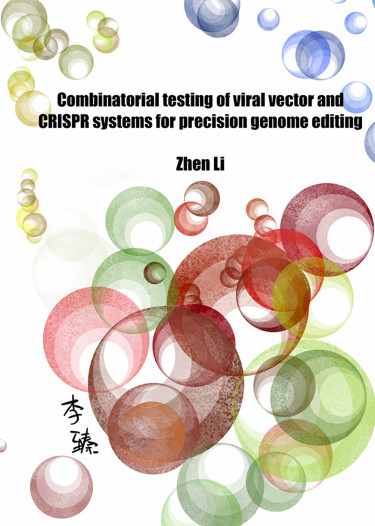
- Zhen Li "Combinatorial testing of viral vector and CRISPR systems for precision genome editing" (2025) Combinatorial testing of viral vector and CRISPR systems for precision genome editing | Scholarly Publications
- Current position, Postdoctoral fellow, First Affiliated Hospital of Sun Yat-sen University, Guangdong, P.R. China.
Ph.D. thesis co-supervision: